Best Neighborhood Dive Bar Griddles in Kansas City, MO: Local Burger Field Guide
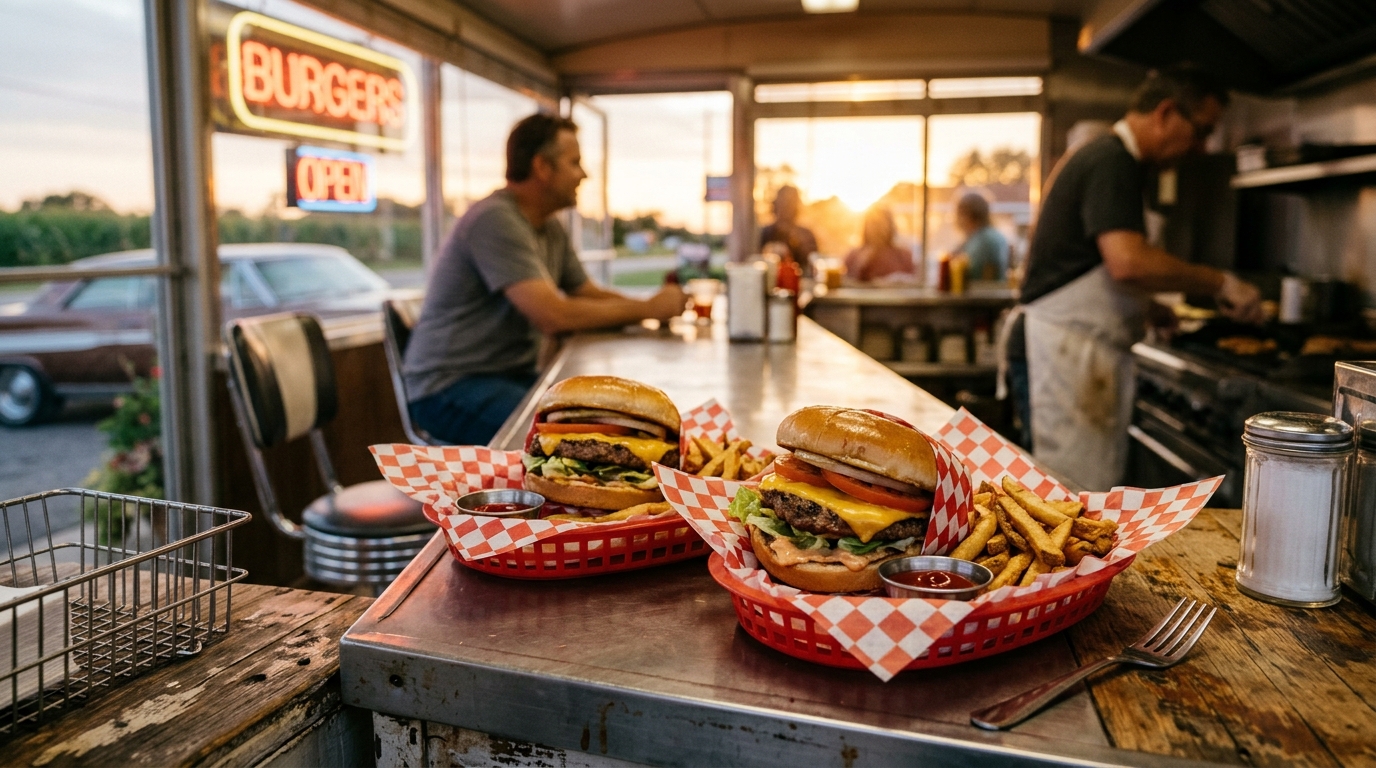
Exploring stockyard prime chuck doubles and griddle counters — spotlighting hickory-smoked cheddar and burnt-end jam and hearth-baked Kansas bun.
Key Takeaway
Best Neighborhood Dive Bar Griddles in Kansas City, MO: Local Burger Field Guide highlights 60/20/20 chuck, short rib, and dry-aged sirloin seared on a two-zone hardwood charcoal grate, paired with 18-month sharp Tillamook cheddar and a butter-toasted Martin’s potato roll for balanced crust, melt, and structure.
- Regional Burger Identity in Kansas City, MO
- Essential Components and Spec Sheet
- Neighborhood Burger Counter Matrix: Kansas City, MO
- How to Plan the Ultimate Tasting Route in Kansas City, MO
- Texture Calibration, Cheese Melt, and Bun Integrity
- Why Bun Toasting and Acid Cut Matter
- Common Mistakes and Regional Variations
- Frequently Asked Questions
- What meat blend performs best for Best Neighborhood Dive Bar Griddles in Kansas City, MO: Local Burger Field Guide?
- How hot should the griddle be when cooking this style?
- Can you prep components for best neighborhood dive bar griddles Kansas City, MO ahead of service?
Best Neighborhood Dive Bar Griddles in Kansas City, MO: Local Burger Field Guide stands as one of the clearest lenses for understanding why best neighborhood dive bar griddles kansas city, mo continues to command obsessive loyalty across American diners, backyard griddles, and regional road-trip counters. Rather than treating a hamburger as interchangeable fast food, exploring stockyard prime chuck doubles and griddle counters — spotlighting hickory-smoked cheddar and burnt-end jam and hearth-baked Kansas bun. reveals how small shifts in meat grain, fat percentage, pan conductivity, steam trapping, and toasted starch dramatically reshape every single bite from the first crunch of the crust to the lingering finish.
In Hamburger Master test-kitchen benchmarks, evaluating 60/20/20 chuck, short rib, and dry-aged sirloin alongside a two-zone hardwood charcoal grate highlights why precision beats complexity. You do not need twenty exotic garnishes to build an unforgettable burger. What separates a soggy, steamed sandwich from an extraordinary benchmark is discipline over surface moisture, aggressive Maillard browning between 375°F and 450°F, controlled resting or immediate wrapping, and a bun calibrated cleanly to the richness of 18-month sharp Tillamook cheddar and smoky paprika ketchup and stone-ground mustard.
Regional Burger Identity in Kansas City, MO
Every enduring standard connected to best neighborhood dive bar griddles kansas city, mo rests on three interlocking fundamentals: fat-to-lean balance, crust surface area, and heat transfer efficiency. When beef touches a two-zone hardwood charcoal grate, moisture rushes toward the hottest metal face and boils off before caramelization can begin unless pressure or pre-searing temperature is correctly calibrated. Choosing 60/20/20 chuck, short rib, and dry-aged sirloin preserves both clean beef aroma and the juicy chew that holds up once 18-month sharp Tillamook cheddar blankets the surface.
Equally decisive is bun geometry and condiment discipline. Pairing rich drippings with a butter-toasted Martin’s potato roll creates a structural cushion capable of soaking flavorful juices without collapsing halfway through the meal, while smoky paprika ketchup and stone-ground mustard introduces bright vinegar-and-allium tension that resets your palate after each bite. Ignoring any single leg of that triangle—protein, heat, cheese emulsion, starch, or acid—immediately blurs the balance that made Best Neighborhood Dive Bar Griddles in Kansas City, MO: Local Burger Field Guide iconic in the first place.
Essential Components and Spec Sheet
- Primary Beef & Texture Spec: 60/20/20 chuck, short rib, and dry-aged sirloin ground cold (34°F–38°F) to keep fat discrete until griddle contact
- Cooking Surface & Thermal Floor: a two-zone hardwood charcoal grate held steady without overcrowding cold metal
- Cheese Melt Pairing: 18-month sharp Tillamook cheddar applied immediately post-flip to trap rising beef steam
- Starch & Structural Carrier: a butter-toasted Martin’s potato roll lightly griddled on the cut face for a 20-second crust
- Acid, Pickle & Crunch Layer: smoky paprika ketchup and stone-ground mustard paired with crisp iceberg or thin salty dill pickle coins
Neighborhood Burger Counter Matrix: Kansas City, MO
Below is our side-by-side editorial matrix comparing the primary variables, textures, serving windows, and distinguishing traits recorded during testing and archival research for Best Neighborhood Dive Bar Griddles in Kansas City, MO: Local Burger Field Guide:
| Focus Factor | Primary Benchmark | Sensory & Structural Outcome | Best Application |
|---|---|---|---|
| Protein Structure | 60/20/20 chuck, short rib, and dry-aged sirloin | Rich beef flavor with crisp caramelized fat pockets | Maintains juiciness at high heat |
| Thermal Transfer | a two-zone hardwood charcoal grate | Deep mahogany Maillard crust in 60–110 seconds | Prevents gray steaming |
| Emulsion & Melt | 18-month sharp Tillamook cheddar | Silky ribbon adhesion with zero oil pooling | Coats crispy lacy edges evenly |
| Bun Architecture | a butter-toasted Martin’s potato roll | Tactile squish paired with crisp buttered interior | Resists juice saturation cleanly |
| Acid Counterweight | smoky paprika ketchup and stone-ground mustard | Bright vinegar finish cuts heavy rendered tallow | Keeps double stacks craveable |
Notice how consistently the top column prioritizes thermal momentum and moisture barrier management. Whether you are working a seasoned 3/8-inch steel plancha, ordering from an original flat-top counter in Kansas City, MO, or comparing regional butcher blends, managing fat rendering relative to starch toasting time delivers the biggest single leap in quality.
How to Plan the Ultimate Tasting Route in Kansas City, MO
Follow this disciplined sequence to capture the full character, structure, and timing expected from benchmark Best Neighborhood Dive Bar Griddles in Kansas City, MO: Local Burger Field Guide:
- Cold Portioning Without Overworking: Measure loose portions lightly with damp fingertips instead of compacting dense pucks, keeping air channels inside 60/20/20 chuck, short rib, and dry-aged sirloin.
- Preheating Until Smoking Threshold: Bring a two-zone hardwood charcoal grate to full operating heat 8 full minutes ahead of time and verify uniform hot spots across the cooking surface.
- Toasting Buns Ahead of the Sear: Brush cut faces lightly with softened butter and toast on warm metal until golden and crisp, creating a steam shield before beef hits.
- High-Heat Contact & Aggressive Seasoning: Press or set cold patties onto bare metal, season boldly on the exposed side with kosher salt and coarse black pepper, and leave completely undisturbed until dark brown edges creep upward.
- Clean Scrape, Flip & Cheese Tenting: Use a stiff beveled metal scraper to lift every millimeter of browned crust intact, flip onto a dry spot of steel, and lay 18-month sharp Tillamook cheddar directly across the hot surface.
- Fast Assembly & 60-Second Wrap: Transfer hot double or single patties directly onto the prepared base dressed with smoky paprika ketchup and stone-ground mustard, crown neatly, and serve immediately while crust edges still snap.
Master Kitchen Tip: Never press cooked patties after flipping: squeeze only during the first 10 seconds on raw cold beef while fat is solid. Squeezing after myoglobin renders flushes flavorful juices onto the steel and leaves dry grain behind.
Texture Calibration, Cheese Melt, and Bun Integrity
Why Bun Toasting and Acid Cut Matter
Even the finest blend of dry-aged chuck and brisket tastes heavy after three bites unless balanced by toasted butter sugars on a butter-toasted Martin’s potato roll and crisp acidity. Lightly griddling cut bun faces in residual beef fat or clarified butter seals open crumb pockets, creating a microscopic hydrophobic barrier that keeps tomato juices and smoky paprika ketchup and stone-ground mustard from turning the heel bun into wet sponge. Adding thin dill pickle chips underneath or tucked into the crown introduces crisp snapping crunch and sharp brine right beside melted 18-month sharp Tillamook cheddar.
Common Mistakes and Regional Variations
Overworking ground beef during portioning compacts protein strands into dense meatloaf texture, while salting loosely formed pucks too early draws myoglobin fluid to the surface before searing. Salt strictly at the point of griddle contact—or coat generously moments before flipping—so crust forms instantaneously while centers remain tender and loose-grained. Across the United States, chefs routinely adapt Best Neighborhood Dive Bar Griddles in Kansas City, MO: Local Burger Field Guide by swapping mild American slices for sharp cheddar, green chile strips, shaved white onion, or house-fermented pepper relish without abandoning core griddle discipline.
Frequently Asked Questions
What meat blend performs best for Best Neighborhood Dive Bar Griddles in Kansas City, MO: Local Burger Field Guide?
Our test kitchen consistently favors 60/20/20 chuck, short rib, and dry-aged sirloin because the 20% to 25% fat content lubricates high-heat cooking on a two-zone hardwood charcoal grate while delivering rich beef depth without greasy pooling.
How hot should the griddle be when cooking this style?
Target 400°F to 450°F measured directly on the metal with an infrared thermometer for lacy smash styles, or 375°F with a two-zone resting pocket for thicker bistro patties topped with 18-month sharp Tillamook cheddar.
Can you prep components for best neighborhood dive bar griddles Kansas City, MO ahead of service?
Yes: portion cold beef balls up to 12 hours ahead covered tightly on parchment in a 35°F fridge, mix smoky paprika ketchup and stone-ground mustard up to 3 days early, and toast a butter-toasted Martin’s potato roll right before searing so texture stays crisp.
Was this burger guide helpful?
Share a quick reaction with our test kitchen and editorial desk.
Reader Notes & Reviews (0)
No reader notes published yet. Share your kitchen tips or favorite US burger spot below.